What Supplement Labels Can and Cannot Tell You
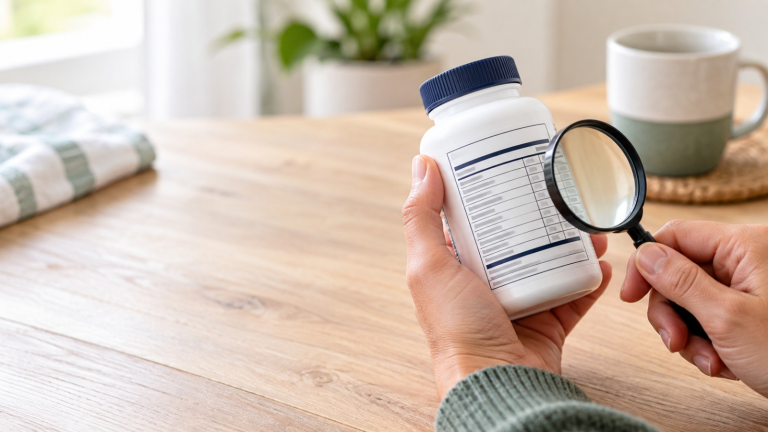
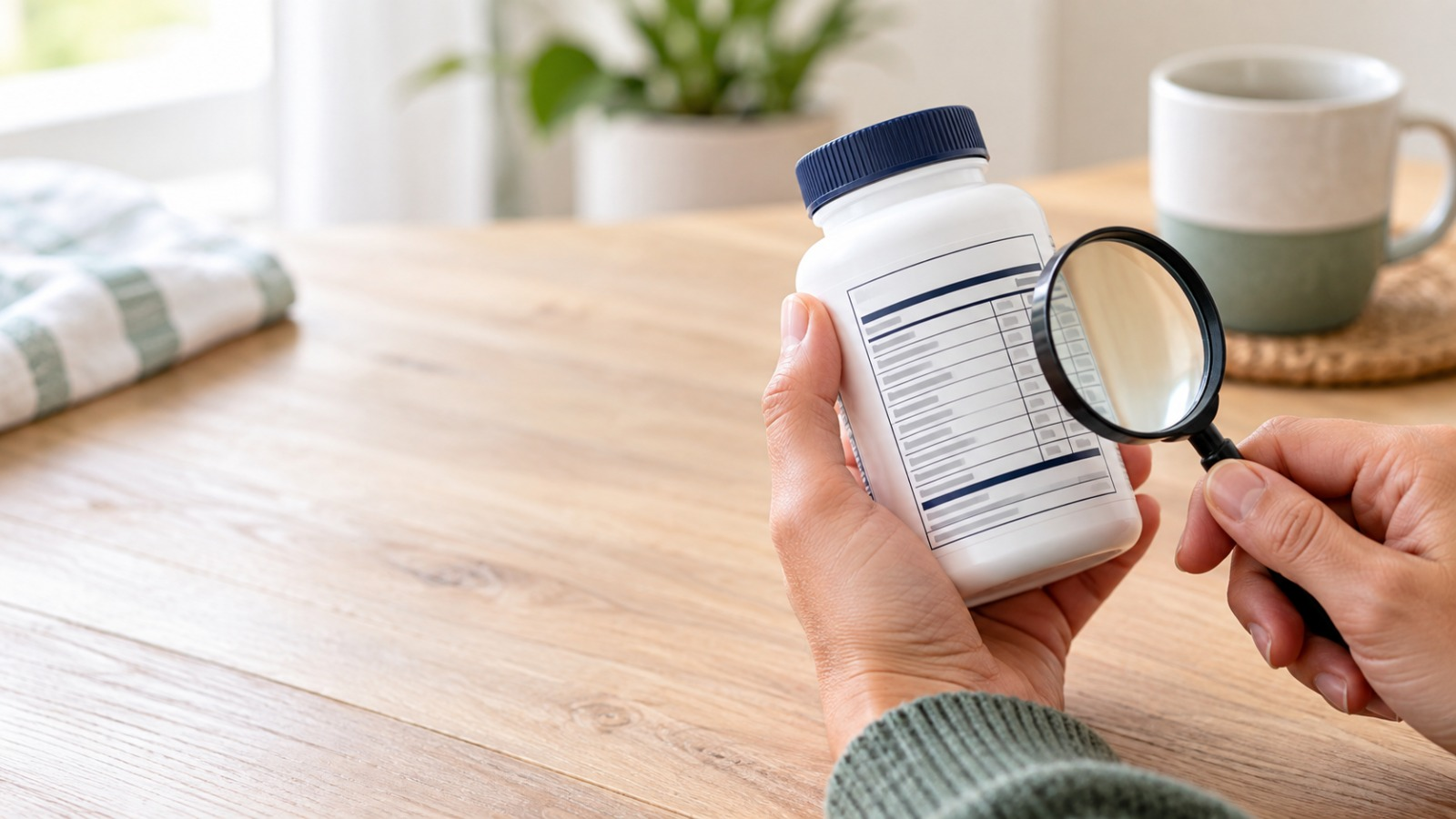
A Supplement Facts panel can answer several important questions, but it cannot tell you whether a product will work for you. Learning the difference between label facts and marketing interpretation makes comparison easier and helps prevent assumptions that the package does not support.
What the Serving Size Means
The serving size tells you how much of the product the listed amounts refer to. It may be one capsule, two tablets, a scoop, a packet, or a measured amount of liquid. If you take half the listed serving, you generally receive half the listed quantity; if you take more, exposure increases along with the possibility of side effects.
The servings-per-container line helps estimate how long the product lasts. Divide the number of capsules or tablets by the number used per serving rather than assuming that bottle count equals day count.
Ingredient Amounts and Daily Values
For vitamins and minerals, the label often lists an amount and a percent Daily Value. The Daily Value provides a reference for how much a nutrient contributes to a daily diet. It is not a personalized prescription and does not mean that a higher percentage is automatically better.
Some dietary ingredients do not have an established Daily Value. The symbol used in that column means a Daily Value has not been established; it does not mean the ingredient is ineffective, unsafe, or present in an unknown amount.
Forms and Sources Matter
A label may identify a nutrient and its chemical form, such as magnesium citrate or magnesium oxide. Botanical labels may include a plant’s common name, scientific name, plant part, extract ratio, or standardization information. Probiotic products may list a genus, species, and strain.
These details can matter because different forms, plant parts, extracts, or strains are not automatically interchangeable. Research involving one form cannot always be applied to another.
How Proprietary Blends Work
A proprietary blend groups several ingredients under one blend name and lists the total amount of the blend. Ingredients are generally listed in descending order by weight, but the label may not reveal how much of each one is present.
That means you may know that an ingredient is included without knowing whether its amount resembles the amount studied in research. It also makes it harder to evaluate duplicated ingredients when combining products.
What Other Ingredients Tell You
The “other ingredients” area may identify capsule materials, flavors, colors, sweeteners, binders, flow agents, oils, or preservatives. This section matters for allergies, dietary preferences, sensitivities, and format. Check for common allergens and confirm whether a capsule is gelatin-based or plant-based when that distinction matters to you.
Directions and Warnings
Directions explain the manufacturer’s intended serving and may include timing or storage instructions. Warnings may address pregnancy, nursing, children, medication, surgery, allergies, or keeping the product out of reach of children.
A warning section cannot anticipate every person’s situation. Absence of a specific warning does not prove that the product is appropriate with your medications or medical history.
What Common Label Phrases Actually Mean
“Supports” language usually describes normal structure or function rather than treatment of a disease. “Natural” does not establish safety. “Made in the USA” does not necessarily mean that every ingredient originated in the United States. “GMP” concerns manufacturing practices, not clinical effectiveness. “Third-party tested” needs supporting detail to be meaningful.
The FDA disclaimer commonly seen on supplement labels states that the claim has not been evaluated by the agency and that the product is not intended to diagnose, treat, cure, or prevent disease. That disclaimer is important, but it does not independently verify that every marketing statement is well supported.
What the Label Cannot Establish
- That the supplement will produce a specific result for you.
- That a combination formula was clinically tested as a finished product.
- That every marketing testimonial is typical.
- That the product is appropriate with your medication or medical condition.
- That a larger dose will produce a larger benefit.
- That a quality badge proves effectiveness.
- That the current online offer, refund policy, or subscription terms will remain unchanged.
How to Use the Label When Comparing Products
Compare products using the same serving basis. Check exact forms, doses, allergens, number of servings, and cost per serving rather than cost per bottle. Then compare claims with authoritative ingredient fact sheets and discuss relevant safety issues with a pharmacist or healthcare professional.
The label is a starting point, not the entire decision. It works best when combined with credible evidence, realistic expectations, and knowledge of your own health situation.
The Bottom Line
A supplement label can tell you what the company declares is in the product and how it expects the product to be used. It cannot guarantee effectiveness, suitability, or safety for a particular person. Read the label carefully, then verify what the label cannot answer.
Use our supplement evaluation guide for a complete checklist before comparing individual products.
Link interno: “supplement evaluation guide” deve apontar para o Artigo 1. Não inserir CTA comercial.
Medical disclaimer: This article is for general educational purposes and is not medical advice. Product labels can change. Review the current bottle and ask a qualified professional about personal safety questions.